The Best Concrete Crack Repair Products: Expert Picks for 2026
4 mar 2026
In this guide, we’ll walk through the top types of crack repair systems professionals rely on in 2026, along with expert-recommended products available at suppliers like ConDecor San Antonio.
Concrete cracks happen. Whether it’s a hairline crack in a garage floor or a deeper issue in a foundation wall, the key to a lasting repair is choosing the right system for the job.
The best concrete crack repair solutions do more than fill gaps. They restore damaged concrete, prevent moisture intrusion, and extend the life of the surface.
In this guide, we’ll walk through the top types of crack repair systems professionals rely on in 2026, along with expert-recommended products available at suppliers like ConDecor San Antonio.
Why Concrete Cracks in the First Place
Concrete is strong, but it is not immune to movement.
Temperature changes, soil settling, moisture infiltration, and heavy loads can all cause cracks to form over time. Some cracks are purely cosmetic, while others indicate deeper structural or substrate issues.
The type of repair product you use should match the behavior of the crack, not just how it looks.
Before choosing a product, evaluate:
Crack width and depth
Whether the crack is structural, surface-level, or deteriorating
Indoor vs. outdoor exposure
Once you understand the situation, selecting the right repair system becomes much easier.
Penetrating Urethane Repair Systems (Best for Deep Cracks, Spalls, and Fast Repairs)
Not all “crack fillers” are surface products. Some are designed to penetrate and rebuild damaged concrete from within.
Example Product Available from ConDecorSA
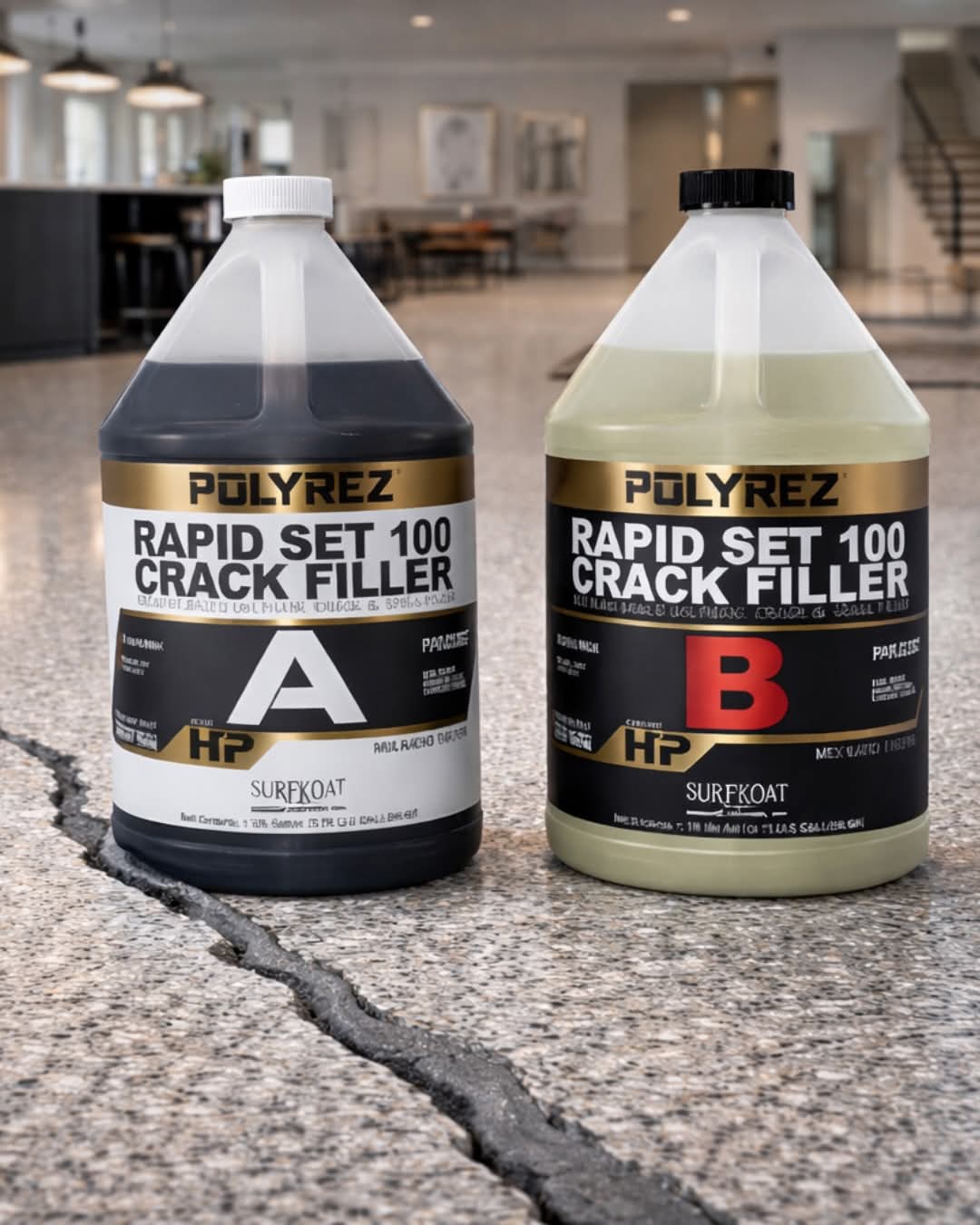
Rapid Set 100 Crack Filler
This is a two-part, ultra low-viscosity urethane system designed to flow deep into cracks, spalls, and deteriorated joints. According to the technical data, it is built for rapid rebuilding of damaged concrete and fast return to service (10–15 minutes).
How it’s applied:
Poured or dispensed directly into cracks
Flows into the substrate due to low viscosity
Can be built up with sand broadcast for larger repairs
Ground flush after curing if needed
Best uses include:
Spalled or broken concrete
Damaged control joints
Deep or deteriorated cracks
Industrial and commercial floors needing fast turnaround
This system goes into the concrete and rebuilds it, rather than just sitting on top.
Epoxy Crack Repair Systems (Best for Structural Bonding)
Epoxy remains one of the strongest materials used in concrete repair when true structural bonding is required.
It cures into a rigid material that bonds both sides of a crack together, restoring load-bearing capability.
Best uses include:
Structural cracks in slabs or foundations
Load-bearing surfaces
Situations where movement has stopped
Epoxy is used when you need to lock the concrete back together, not allow movement.
Polyurethane Sealants (Best for Active or Moving Cracks)
Some cracks continue to move due to environmental conditions. In these cases, rigid systems like epoxy can fail.
Polyurethane sealants remain flexible after curing, allowing them to expand and contract with the concrete while creating a waterproof barrier.
Best uses include:
Driveways and sidewalks
Expansion joints
Exterior cracks exposed to weather
These systems are designed to seal and flex—not rebuild.
Epoxy Patch Compounds (Best for Surface Repairs and Preparation)
For shallow cracks, chipped edges, and surface imperfections, patch compounds are the most effective solution.
Example Product Available from ConDecorSA
Epoxy Patch Gel 7200
This is a high-build, two-part epoxy patching compound designed for surface-level repairs. It features a thick, non-sag consistency that allows it to be troweled into place and shaped as needed .
How it’s applied:
Surface is cleaned and mechanically prepped
Crack is opened if needed
Material is applied with a trowel or putty knife
Can be overfilled and sanded flush for coatings
Best uses include:
Surface cracks and minor defects
Small patch jobs and void filling
Preparing concrete before epoxy or polyaspartic coatings
This system stays on the surface and rebuilds the profile, rather than penetrating deeply.
Rapid-Set Repair Systems (Best for Fast Return to Service)
Speed is critical in many environments. Some repair systems are specifically designed to minimize downtime.
Rapid Set 100 falls into this category, offering traffic readiness in minutes, making it ideal for commercial and industrial settings where shutdown time must be limited .
Common uses include:
Emergency repairs
Commercial maintenance
High-traffic environments
How to Choose the Best Concrete Crack Repair Product
Not every crack requires the same solution. The best results come from matching the product to the problem.
Use penetrating urethane (Rapid Set 100) when:
The concrete is deteriorating or spalled
The crack is deeper than it appears
Fast return to service is required
Use epoxy when:
The crack is structural
Strength restoration is required
Movement is minimal
Use polyurethane sealant when:
The crack moves or expands
Waterproofing is required
The repair is outdoors
Use patch compounds (7200) when:
The damage is surface-level
The crack is shallow
You are preparing for coatings
Using the wrong system can lead to premature failure, so understanding these differences is critical.
Best Practices for Long-Lasting Crack Repairs
Even the best materials will fail without proper preparation.
Professionals follow these key steps:
Clean the crack thoroughly (remove dust, oils, and debris)
Mechanically open or profile the crack when needed
Apply the material based on its intended method (pour vs. trowel)
Allow proper curing before traffic or coatings
Surface preparation is often the difference between a repair that lasts months and one that lasts years.
Ready to Patch Up Your Concrete Cracks?
Concrete cracks are common, but they do not have to turn into costly structural problems.
In 2026, the most effective repair solutions fall into four categories:
Penetrating urethane systems for deep repair and fast turnaround
Epoxy systems for structural strength
Polyurethane sealants for flexibility and waterproofing
Patch compounds for surface repair and preparation
ConDecor San Antonio carries professional-grade solutions like:
Rapid Set 100 Crack Filler
Epoxy Patch Gel 7200
Final takeaway:
If the damage goes into the concrete, use a penetrating system.
If the repair stays on the surface, use a patching system.
When the material matches the problem, the repair is far more likely to last.